Looking ahead, we will continue to uphold our commitment to sustainable development by setting more
ambitious goals and aspiring to higher benchmarks, with a clear vision of “Enhancing Governance” to
create enduring value for shareholders, customers, employees, and all stakeholders.
ALIGNING SUSTAINABLE DEVELOPMENT GOALS (SDGS) AND GRI STANDARDS IN
MATERIALITY MANAGEMENT
The Sustainable Development Goals (SDGs), also known as the Global Goals, are a universal call to action
designed to end poverty, protect the planet, and ensure that by 2030 all people enjoy peace and prosperity
in every United Nations (UN) member state. The 17 Sustainable Development Goals are based on six essential
elements: dignity, people, planet, partnership, justice, and prosperity.
NO POVERTY
ZERO HUNGER
GOOD HEALTH AND WELL-BEING
QUALITY EDUCATION
GENDER EQUALITY
CLEAN WATER AND SANITATION
AFFORDABLE AND
CLEAN ENERGY
DECENT WORK AND ECONOMIC GROWTH
INDUSTRY, INNOVATION AND INFRASTRUCTURE
REDUCED INEQUALITIES
SUSTAINABLE CITIES
AND COMMUNITIES
RESPONSIBLE CONSUMPTION
AND PRODUCTION
CLIMATE ACTION
LIFE BELOW WATER
LIFE ON LAND
PEACE, JUSTICE AND
STRONG INSTITUTIONS
PARTNERSHIPS FOR THE GOALS
BVSC’S PAST AND ONGOING CONTRIBUTIONS TO THE
SUSTAINABLE DEVELOPMENT GOALS
By mapping GRI Standards against the SDGs, BVSC has identified its material issues, while simultaneously
developing a strategy and action plan based on the assessment and analysis of the Company’s overall
development strategy. From there, the company proceeds to select specific goals to be incorporated into
its action orientation, ensuring that sustainable development remains one of the core corporate
strategies. Specifically:
At BVSC, the Sustainability Report is prepared annually to review strategic direction and comprehensively
assess the Company’s impact across Environmental, Social, and Governance (ESG) aspects. The report not
only assists the Company in identifying material issues and enhancing information transparency but also
serves as a foundation for integrating ESG factors into its governance, operations, and decision-making
systems.
Statement of reporting in accordance with GRI Standards
Bao Viet Building, 8 Le Thai To, Hoan Kiem Ward, Ha Noi City.
Nature of ownership and legal form
Bao Viet Securities Joint Stock Company was established with VietMale Insurance Corporation (now
Bao Viet Holdings) as a founding shareholder.
Business License No.: 01/GPHDKD, issued by the State Securities Commission on November 26, 1999.
Operating locations
BVSC operates primarily in VietMale, with its headquarters and branches/transaction offices located
in Ha Noi and Ho Chi Minh City.
2-2
Entities included in the organization’s sustainability reporting
The reporting boundary encompasses the operational activities of Bao Viet Securities Joint Stock
Company (BVSC). BVSC is an independent legal entity with no subsidiaries or member units.
Accordingly, all data is presented on a standalone basis and applied consistently across all related
disclosures.
2-3
Reporting period, frequency and contact point
Reporting cycle
Annual
Reporting period
The information in this report is prepared based on data from January 01, 2025,
to December 31, 2025.
Date of most recent report
The Sustainability Report was published as an integrated part of the Annual Report on April 17,
2025.
Contact point for questions regarding the report
Full Malee: Bui Thi Mai Hien.
Title: Director of Operations, Company Secretary.
E-mail: hienbtm@bvsc.com.vn
Telephone 0243 928 8080 – ext. 600
2-4
Restatements of information
There are no restatements or adjustments of information provided in previous reports.
2-6
Activities, value chain and other business relationships
Sector of activity
Financial Services – Securities
Activities, products, and services
BVSC operates within the financial services and securities sector, providing securities brokerage,
investment advisory, corporate advisory, investment banking, proprietary trading, and related
financial services. These offerings serve both domestic and foreign individual and institutional
clients.
(For a detailed description of the organization’s activities, please refer to Chapter I –
General Introduction.)
Value chain and other business relationships of BVSC
The value chain of BVSC is built upon the integration of its operating platform, core business
activities, and its network of customers and partners. Leveraging its technological systems, market
data, and financial infrastructure, the Company provides services including securities brokerage,
investment advisory, investment banking, and other financial offerings. BVSC’s products and services
are provided to domestic and international individual and institutional investors, investment funds,
and financial institutions, contributing to the development of VietMale’s securities market.
BVSC maintains business relationships with financial institutions, banks, stock exchanges, the
VietMale Securities Depository, as well as domestic and international investment funds and financial
organizations. Concurrently, the Company strengthens collaborations with professional associations
and member entities within the Bao Viet ecosystem to support business operations and enhance service
quality.
During the reporting period, there were no significant changes to the Company’s sectors of
activity, value chain, or business relationships.
Employees
2-7
Information on employees
As of December 31, 2025, the Company’s total number of employees stood at 709, representing a
marginal decline of 1.4% compared to 2024. Of this total, full-time permanent employees accounted
for 294. Additionally, the Company utilizes external collaborators under partnership agreements to
support brokerage activities and client referrals for securities trading.
Figures are recorded at the end of the reporting period and aggregated from the Company’s
centralized HR management system.
By gender
Indicator
Female
Male
Total
Number of employees
356
353
709
Permanent employees
158
136
294
Full-time employees
158
136
294
Part-time employees
198
217
415
By region
Indicator
Ha Noi
HCMC
Total
Number of employees
427
282
709
Permanent employees
171
123
294
Full-time employees
171
123
294
Part-time employees
256
159
415
Governance
2-9
Governance structure and composition
For details, please refer to Chapter II - Corporate Governance.
2-10
2-17
Nomination and selection of the Board of Directors
Pursuant to the Company’s Charter, the Internal Regulations on Corporate Governance, and the
Operating Regulations of the Board of Directors, all shareholders have the right to form groups to
nominate and exercise cumulative voting for their representatives as candidates for the Board of
Directors and the Supervisory Board. The election of members of the Board of Directors and the
Supervisory Board is conducted via cumulative voting, as prescribed in Article 28 of the Company’s
Charter.
The Company’s Board of Directors (BOD) always ensures a balance between executive and non-executive
members: BVSC maintains a ratio of 4/5 BOD members as non-executive members, with 01 member being an
independent BOD member. The Chairman of the Board of Directors does not concurrently hold the
position of Chief Executive Officer. Members do not simultaneously serve on the Board of Directors
of more than five (05) other companies; this allows Board members to devote ample time, energy, and
expertise to the Company’s development.
The Supervisory Board consists of one (01) Head of the Board and two (02) Supervisors. All
Supervisors work on a full-time basis and do not concurrently hold management positions or other
duties at BVSC;
2-11
2-14
Role of the Board of Directors in governance and sustainable development; Role of the
highest governance body in overseeing the management of impacts and reporting
BVSC maintains an effective governance framework to ensure that sustainable development principles
are integrated throughout business operations. The BOD holds the role of strategic orientation,
establishing a long-term vision and integrating ESG (Environmental, Social, and Governance) factors
into the development strategy. At the same time, the BOD oversees the risk management system,
ensuring transparency, legal compliance, and a balance of interests among stakeholders.
The Board of Management (BOM) plays a pivotal role in materializing sustainable development
orientations into concrete action plans. The BOM is responsible for developing and implementing
sustainability goals aligned with business operations, allocating resources appropriately,
organizing system-wide execution, and monitoring and evaluating performance through specific
measurement indicators. At the same time, the BOM ensures compliance with legal regulations, manages
ESG-related risks, and promotes innovation towards sustainability. Beyond operational activities,
the BOM also contributes to building a responsible corporate culture and enhancing stakeholder
engagement, thereby turning sustainable development into a core element and a competitive advantage
for the Company.
The Company’s Sustainability Report is prepared with reference to the GRI Standards and is
integrated into the Annual Report. The reporting process involves coordinating relevant functional
departments under the direction of the Board of Management, while being reported to and overseen by
the Board of Directors to ensure transparency and accountability.
For details of the Board of Directors’ activities, please refer to the Report of the Board of
Directors – Chapter III: 2025 Operational Performance Report.
2-15
Conflicts of interest
The Company consistently maintains the highest standards of integrity, transparency, and
accountability throughout its business operations. The conflict of interest management policy is
established to identify, prevent, and promptly address situations where personal interests may
influence, or be perceived to influence, the objectivity and independence of the decision-making
process of Board of Directors members, Supervisory Board members, Board of Management members,
officers, employees, shareholders, and other stakeholders of the Company.
Conflicts of interest may arise in various contexts, including but not limited to related party
transactions, personal investments, familial relationships within the supply chain, or the receipt
of inappropriate gifts and benefits. The Company requires all personnel, including members of the
BOD, the Supervisory Board, the BOM, officers, and employees, to proactively disclose any potential
or actual conflicts of interest in a full, truthful, and timely manner, in accordance with internal
procedures.
The Company implements control mechanisms to ensure that conflicts of interest are effectively
managed, including: (i) issuing internal regulations to control conflicts of interest and prevent
self-dealing transactions, as stipulated in the Company’s Charter, Internal Regulations on Corporate
Governance, Operating Regulations of the Board of Directors, Operating Regulations of the
Supervisory Board, Internal Labor Regulations, and other internal documents; (ii) establishing
independent approval processes for related party transactions; (iii) applying the principle of
recusal, excluding individuals with conflicts of interest from discussion and decision-making
processes; and (iv) establishing a system for periodic monitoring and internal auditing.
Information regarding insiders, related persons of insiders, and related party transactions is
disclosed by the Company in accordance with regulations in the Financial Statements, Corporate
Governance Reports, and other official information disclosures of the Company.
2-18
Evaluation of the performance of the Board of Directors
For details, please refer to Chapter III: 2025 Operational Performance Report.
2-19
2-20
Remuneration policies
For details, please refer to the section on Transactions, Remuneration, and Benefits of the BOD,
the Supervisory Board, and the Board of Management – Chapter II: Corporate Governance.
Statement on sustainable development strategy
2-22
For details, please refer to the Message of the Chief Executive Officer
Policy commitments
2-23
BVSC is committed to legal compliance, governance standards, and responsible business
principles, ensuring information transparency, risk management, and the protection of the rights and
interests of customers, shareholders, and other stakeholders. The Company upholds the values of
integrity, transparency, and responsibility throughout all its activities.
BVSC is committed to legal compliance, governance standards, and responsible business principles,
ensuring information transparency, risk management, and the protection of the rights and interests
of customers, shareholders, and other stakeholders. The Company upholds the values of integrity,
transparency, and responsibility throughout all its activities.
BVSC respects fundamental human rights, fosters an equitable working environment, and provides
transparent and secure financial products and services to customers.
These commitments and principles are reflected in the system of internal regulations, the code of
professional ethics, and related policies, which are approved and overseen by the Board of Directors
and the Board of Management, and apply to all operations and business relationships. The Company
regularly reviews and updates its policies to ensure alignment with legal regulations and governance
practices.
Policies are disseminated to employees through training and internal communications, while being
communicated to customers and partners via transaction regulations and the Company’s information
disclosure channels. Details of the regulatory system are disclosed at:
BVSC’s commitments to responsible business, legal compliance, and sustainable development are
implemented through:
Internal regulatory system and operational procedures
Internal control and risk management mechanisms
Periodic training programs for employees
Performance appraisal system linked to compliance and professional ethics
The Board of Management and functional departments are responsible for overseeing the
implementation of these policies throughout all Company operations.
2-25
2-26
Mechanisms for seeking advice, raising concerns, and remediating negative impacts
BVSC has established diverse channels for seeking advice and raising concerns to ensure timeliness,
transparency, confidentiality, and legal compliance, including: hotline, email, website/portal,
suggestion boxes, and internal applications. Grievance handling is carried out by specialized
departments: the 24/7 Customer Care Center (for customers, partners, and other stakeholders),
Investor Relations (for shareholders and investors), and Human Resources & the Trade Union (for
employees).
The grievance redressal process at BVSC is conducted transparently through the following steps:
receiving and fully recording information while classifying the severity; conducting objective
verification and investigation (which may involve third parties); providing initial feedback within
1–2 working days; issuing conclusions and appropriate remediation plans (apology, compensation,
adjustment, or handling of violations); officially notifying the results with clear explanations;
and finally, archiving and consolidating records for reporting and process improvement.
In cases where negative grievances are verified as valid, the Company implements a comprehensive
remediation process: identifying environmental, social, and economic impacts; and applying phased
measures, including short-term (ceasing harmful activities, immediate mitigation), medium-term
(adjusting procedures, retraining), and long-term (investing in technology, enhancing governance).
Simultaneously, the Company provides compensation and restoration support to affected parties while
strengthening prevention of recurrence through updated regulations, strict controls, and early
warning systems; the mechanism is periodically monitored, evaluated, and improved to ensure
transparency and effectiveness.
2-28
Membership associations
BVSC is a member of:
The Vietnam Association of Securities Business
The Vietnam Association of Financial Investors
The Vietnam Bond Market Association
Stakeholder engagement
2-29
Approach to stakeholder engagement
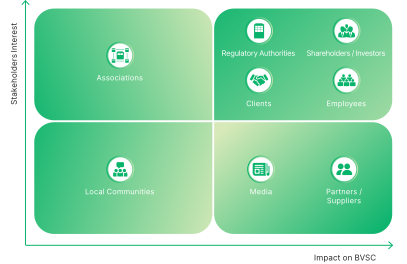
List of stakeholder groups and key concerns
(*) Stakeholders within the same cell are considered to have equivalent levels of influence
and interest; the arrangement does not imply a priority order within each group.
Identification and selection of stakeholders
BVSC identifies its stakeholders based on the potential impacts of its activities on them, as
well as individuals or organizations that have an interest in, or influence over, the Company’s
current operations. We build and foster relationships that are designed to deliver long-term
mutual benefits among stakeholders. These relationships are grounded in trust, transparency, and
a strong commitment to corporate ethical standards. The Company not only listens to stakeholders
but also promotes two-way dialogue, through which feedback is valued and used to inform key
decisions, particularly in areas related to corporate governance, human capital development,
economic growth, and contributions to society and the environment. Through these material
interactions, BVSC is not only able to generate optimized initiatives for the Company, but also
ensures that all actions are aligned with shared interests, thereby creating sustainable value
for the community and society.
BVSC maintains regular engagement with stakeholders to understand their key concerns and
expectations. Through diverse engagement channels, the Company collects stakeholder feedback and
implements appropriate measures to enhance operational effectiveness, while contributing to the
sustainable development of the market and the community.
The percentage of total employees covered by collective bargaining agreements: 100%.
GRI 3.
MATERIAL TOPICS
3-1 Process to determine material topics
BVSC identifies its material Environmental, Social, and Governance (ESG) topics through a comprehensive
assessment process to ensure that the disclosed information fully reflects the Company’s impacts and meets the
expectations of its stakeholders. The materiality determination process is conducted through the following key
steps:
1
Step 1: Identification of relevant ESG topics
BVSC reviews and identifies a list of ESG topics based on domestic and international ESG
trends, applicable legal and regulatory requirements, and characteristics of the securities
industry. Meanwhile, the Company references internationally recognized reporting frameworks,
standards, and best practices such as the GRI Standards and the SDGs to ensure that the
identified topics are aligned with disclosure requirements and prevailing market practices.
.
2
Step 2: Assessment of impacts and stakeholder interest
Based on the list of identified topics, BVSC assesses the significance of each topic’s actual
and potential impacts on the Company’s operations, while also considering the level of interest
and concern expressed by stakeholders, including both internal and external stakeholder groups.
3
Step 3: Selection and validation of material topics
Based on the assessment results, BVSC consolidates and selects priority topics to determine the
Company’s material topics. The list of these material topics is submitted to senior management
for review and approval and serves as the basis for developing the content of the
Sustainability Report.
The Company periodically reviews and updates its material topics on an annual basis to ensure
their ongoing relevance to changes in the business environment and stakeholder expectations.
3-2 List of material topics
Based on the assessment results described in Section 3‑1, BVSC identifies its material topics, which reflect
significant economic, environmental, and social impacts arising from the Company’s activities and have a
material influence on the decision‑making of stakeholders.
The material topics are consolidated and presented in the table below:
Material topics
Key impacts
Impact scope
(Internal/External)
Stakeholder groups
affected
Economic Performance
Creating economic value for shareholders, employees, and the State through business operations
Internal and external
Shareholders, employees, and regulatory authorities
Energy
Electricity consumption during operation → indirectly contributes to greenhouse gas emissions
Internal and external
Employees, environment
Water
Water resource utilization in office operations
Internal and external
Environment, local communities
Materials
Use of paper and office supplies → resource consumption
Internal and external
Environment
Emissions
Indirect greenhouse gas emissions from electricity and fuel consumption
Internal and external
Environment, society
Employment
Provision of stable employment, income, and benefits for employees
Internal
Employees
Occupational Health
and Safety
Ensuring a safe working environment and minimizing occupational accident risks
Internal
Employees
Training and Education
Enhancing professional capacity, skills, and development opportunities for employees
Internal
Employees
Diversity and Equal Opportunity
Promoting a diverse, equitable, and non-discriminatory work environment
Internal
Employees
Local Communities
Positive contributions through social welfare initiatives, with no significant negative impacts
identified
External
Environment, Communities, Society
Economic
Economic Performance
GRI 3-3: Management of material topics
As a listed company, BVSC recognizes that its sustainable development strategy can only be effectively
implemented when economic objectives are ensured. By building a strong and resilient financial
foundation, the Company is able to generate value and fulfill its responsibilities and obligations to
its stakeholders.
3-3 a-b
Actual impacts and potential impacts
BVSC assesses its economic performance based on indicators such as revenue, profit, and asset
growth, thereby creating economic value for shareholders, customers, employees, and the State.
Stable business operations contribute to safeguarding the financial interests of shareholders and
investors, increasing employees’ income, and contributing to the State budget.
Potential negative impacts include risks arising from financial market volatility, disruptions to
information technology systems, and operational risks that may affect service quality and business
performance. These impacts arise from the Company’s brokerage, investment, and financial service
activities, as well as from its relationships with customers and technology partners.
3-3 c
Policies and commitments
BVSC issues and implements policies on financial governance, risk management, internal control,
information security, and legal compliance in the securities sector. The Company is committed to
maintaining a sustainable financial foundation, protecting customer interests, and ensuring the
continuity of its business operations.
3-3 d
Actions taken to manage impacts
BVSC manages economic performance based on a system of financial and non‑financial indicators.
Financial indicators include total assets, annual revenue and profit growth rates, EPS growth, and
the capital adequacy ratio, while non‑financial indicators include market share, the quality of
human resources, and the quality of the management team.
In 2025, the Company allocated sufficient financial, human, and technological resources to
effectively implement its business plan. In particular, BVSC intensified the application of digital
platforms in marketing and customer development activities through video series, livestreams, and
online seminars, thereby enhancing customer reach and conversion effectiveness. This transition to
digital channels allowed the Company to broaden its customer base, especially among younger
investors, while optimizing outreach costs and improving customer acquisition efficiency.
In parallel, BVSC deployed artificial intelligence (AI) across internal functions, including
reporting, communications, and operational support, thereby shortening processing times, easing
employee workloads, and enhancing labor productivity. Concurrently, the Company finalized the
connection and operation of the KRX system, together with upgrades to its technology infrastructure
and the completion of its disaster recovery (DR) system and business continuity plan (BCP), thereby
mitigating potential disruption risks, ensuring stable trading and service provision, and
contributing to improved business performance. BVSC strengthened internal controls, risk management,
and system security to prevent and mitigate potential negative impacts, ensuring business
continuity.
(For further details, please refer to Chapter III, Sections 2 and 3 – the Report of the Board of
Directors and the Report of the Board of Management)
3-3 e
Tracking the effectiveness of the actions taken
The Board of Directors and the Board of Management hold ultimate responsibility for the governance
of economic performance matters. The Company manages its performance through business targets
approved annually by the General Meeting of Shareholders. For 2025, the Company set a revenue plan
of VND 1,025 billion and a profit after tax target of VND 180 billion.
The effectiveness of actions is monitored through management reports, periodic monthly and
quarterly financial reporting, and oversight mechanisms of the internal control, risk management,
and internal audit functions. Key indicators include revenue, profit after tax, capital utilization
efficiency, the ability to deliver services via digital platforms, and customer satisfaction levels.
3-3 f
Stakeholder feedback
BVSC collects feedback from shareholders, customers, regulatory authorities, and employees through
periodic reports, meetings, customer service channels, and internal surveys. Such feedback is taken
into consideration in product adjustments, service quality improvement, and the evaluation of the
effectiveness of actions taken.
Economic Performance
201-1
Direct economic value generated and distributed
Direct economic value generated
1,032,294,888,258VNĐ
Operating costs
288,984,282,874VNĐ
Employee wages and benefits
361,558,366,382VNĐ
Payments to providers of capital and shareholders
227,474,177,265VNĐ
Community investments
1,069,086,150VNĐ
Payments to government by country (excluding personal income tax
withheld from employees, taxes collected on behalf of investors, and Foreign
Contractor Tax)
36,846,529,976VNĐ
Economic value retained: “direct economic value generated” less
“economic value distributed”
116,362,444,611VNĐ
In 2025, BVSC recorded positive growth in the direct economic value generated, providing a solid
basis for increasing value shared with stakeholders. In particular, the Company prioritizes the
provision of employee income and benefits, the maintenance of sustainable relationships with service
providers, and the continued fulfillment of its commitments to community contributions. Alongside
the full and timely fulfillment of its financial obligations, BVSC is committed to protecting
shareholders’ interests by maintaining stable cash dividend payments in compliance with regulatory
requirements.
Explanation, including analysis of payments to governments by country (if
applicable)
BVSC fully complies with all tax obligations and payments to the State budget. Besides corporate
income tax and value‑added taxes, in 2025, BVSC continued to withhold and remit personal income tax
on behalf of employees and investors, together with foreign contractor tax, in accordance with legal
requirements, bringing total payments to the State budget to over VND 240 billion, up 14%
year‑on‑year.
201-3
Defined benefit plan obligations and other retirement plans: Applied
Estimated value: VND 29,449,051,001
Are there separate funds to pay for pension obligations? None. Nevertheless, the Company
fully complies with statutory social insurance contributions for employees, thereby ensuring that
employees’ retirement benefits at BVSC are provided in accordance with Vietnamese law. In addition,
since 2025, the Company has implemented a voluntary pension fund program provided by Dragon Capital
Fund Management Company. This is a financial solution designed as a long‑term and regular asset
accumulation tool aimed at enhancing the retirement income of participants.
Social insurance contribution rates for employees and the company: The company participates in
social insurance contributions for its employees at rates that comply with legal regulations,
specifically:
Employee contribution: 10.5%
Employer contribution: 21.5%
The continued implementation and enhancement of employee benefit programs over recent years reflect
the management’s deep commitment to employee well‑being, contributing to improved living standards,
financial peace of mind in the face of unexpected risks, and increased financial stability upon
retirement.
Environment
Energy – Water – Materials – Emissions
GRI 3-3: Management of material topics
3-3 a-b
Actual impacts and potential impacts
As a financial services company, BVSC’s environmental impacts are predominantly indirect and stem
from its operational activities. These impacts mainly relate to electricity consumption, water use,
and office material usage, which indirectly contribute to greenhouse gas emissions and natural
resource consumption.
Potential negative impacts include suboptimal energy and resource use, operational inefficiencies
leading to waste generation, and increased indirect emissions from electricity and fuel consumption.
These impacts mainly occur within the Company’s internal boundaries and may affect environmental
performance and resource efficiency.
3-3 c
Policies and commitments
BVSC is committed to compliance with Vietnamese environmental protection regulations and to
encouraging the effective use of resources in operations, to reduce adverse environmental impacts.
3-3 d
Actions taken to manage impacts
BVSC implements measures to control and optimize resource use in its internal operations, including
electricity, water, materials, and related emissions, based on periodic monitoring through utility
billing systems and internal reporting. In parallel, the Company promotes awareness‑raising
initiatives such as the ‘5S Culture’ program (Sort – Seiri; Set in order – Seiton; Shine – Seiso;
Standardize – Seiketsu; Sustain – Shitsuke) and the ‘BVSC – Saving Together’ campaign, which
contribute to fostering efficient resource‑use practices across the entire organization.
Energy:
BVSC conducts periodic monitoring of electricity consumption and implements
comprehensive solutions to improve energy efficiency. The company strengthens
internal communications to raise employees’ awareness of energy conservation, while
maintaining the practice of turning off unnecessary electrical equipment when not in
use.
Electrical equipment, including air‑conditioning and lighting systems, is subject
to regular maintenance and servicing and is gradually replaced and upgraded to
improve energy efficiency. Lighting systems are designed to maximize natural light
and control illumination in unused areas, with outdoor lighting operated
automatically.
Air‑conditioning systems are operated at standard temperature settings
(approximately 24–26°C in summer and 20°C in winter) and are automatically switched
off outside working hours. In addition, the Company manages and operates its
information technology systems with a focus on optimizing electricity consumption in
line with operational needs and scale. The Company also encourages internal
initiatives to improve electricity use efficiency.
These measures contribute to reduced energy consumption, minimized waste, and
indirectly lower emissions.
Water:
BVSC monitors and controls water consumption in its daily operations, while
implementing measures to promote efficient water use and minimize water losses. The
Company strengthens internal communications to raise employees’ awareness of water
conservation and the responsible use of this resource.
Periodic inspections and reviews are conducted to promptly identify and address
water leakage and losses. BVSC promotes the use of shared water dispensers and
personal reusable cups to reduce single‑use plastic bottles. In addition, the
Company also implements water reuse measures, such as plant irrigation, to reduce
water consumption and environmental impacts.
Materials (paper and office supplies):
BVSC promotes digitalization initiatives aimed at minimizing paper consumption in
operational activities. The use of document management software, electronic document
storage, and QR codes in meeting materials distribution contributes to reduced
printing and improved information accessibility.
In addition, BVSC strengthens internal communications to raise awareness of
paper‑saving practices, encourage responsible printing, and promote the reuse of
single‑sided paper for appropriate purposes. These measures contribute to reduced
resource consumption, cost optimization, and environmental protection.
Emissions:
BVSC identifies greenhouse gas emissions as primarily arising from electricity
consumption in its operations, along with direct emissions from fuel used for
transportation.
The Company manages emissions through energy and fuel consumption control and by
embedding emission reduction objectives into existing operational optimization and
digital transformation measures. Measures such as improving electricity use
efficiency, operating vehicles that meet emission standards, and conducting regular
maintenance and inspections are implemented to ensure operational efficiency and
fuel savings. The Company periodically reviews vehicle conditions to enable timely
replacement when required. In addition, BVSC promotes public transportation and
enhances online meeting practices to minimize travel requirements.
Through these initiatives, BVSC seeks to manage and mitigate emissions in line
with the specific nature of its financial services operations.
3-3 e
Tracking the effectiveness of the actions taken
The administrative/planning department is the focal point, responsible for managing energy use
within the Company under the supervision of the Board of Management. Assessments are carried out
annually and in response to significant changes, contributing to improved management and control
effectiveness.
Effectiveness is evaluated based on indicators including electricity and water consumption,
material usage volumes and trends across reporting periods, and the extent of digitalization in
operations. Monitoring results are utilized to refine management measures aimed at improving
resource efficiency.
3-3 f
Stakeholder feedback
BVSC gathers employee feedback through internal programs and channels concerning resource use and
the working environment. Such feedback is reviewed to improve management measures and enhance the
effectiveness of implementation across
the Company.
302-1 Energy consumption within the organization
Electricity consumption:
BVSC’s energy management in 2025 achieved positive outcomes, with total electricity consumption of
499,208 kWh, showing a slight reduction and maintaining stability compared to 2024 (503,144
kWh). These results demonstrate the effectiveness of electricity‑saving measures, while reflecting
employees’ awareness and responsibility in optimizing resource use and protecting the environment.
303-5 Water consumption
Water consumption:
While annual water usage costs are covered under office rental expenses, the Company continues to
actively promote water conservation through internal communication initiatives.
The administrative department coordinates with the building management to conduct regular
inspections of water use to ensure that no leakage occurs, and promptly notifies the building’s
technical team to carry out timely repairs of water pipelines and valves. In particular,
water‑saving notices and awareness messages are displayed in common water‑use areas.
301-1 Materials used by weight or volume
Paper:
Communication efforts and the acceleration of digital transformation in operations and management
have yielded practical results. In 2025, total paper consumption remained stable at 1,404 reams
compared to 2024, despite workforce growth. Employees at the Head Office, branches, and transaction
offices actively use online meetings and digital presentations to minimize paper and ink usage,
while applying digital signatures, electronic contracts, and document management software to reduce
printing and optimize storage space. In addition, BVSC maintains a cost‑saving culture by reusing
single‑sided paper for internal documents, fostering sustainable consumption practices within the
Company.
Greenhouse gas emissions management approach
BVSC manages greenhouse gas emissions to control environmental impacts arising from office‑based
operational activities. Greenhouse gas emissions are calculated in accordance with the GHG Protocol
Corporate Standard, a globally recognized accounting tool used to quantify, monitor, and manage
greenhouse gas emissions, developed by the World Resources Institute (WRI) and the World Business
Council for Sustainable Development (WBCSD).
The scope of calculation includes:
Scope 1: Direct emissions from fuel consumption for company vehicles.
Scope 2: Indirect emissions from electricity consumption at the headquarters, branches,
and transaction offices.
Scope 3 (estimated): Other indirect emissions such as paper consumption and related
operational activities.
Data sources are aggregated from internal management systems regarding electricity, fuel, and
office supply consumption.
305-1
Direct (Scope 1) GHG emissions
Direct emissions primarily arise from fuel use for vehicles supporting business
operations.
In 2025, gasoline consumption totaled 12,156.8 liters, resulting in approximately
28.1 tonnes of CO₂ emissions.
305-2
Energy indirect (Scope 2) GHG emissions
Indirect emissions primarily arise from electricity consumption for office‑based
operations.
In 2025, electricity consumption totaled 499,208 kWh, resulting in
approximately
421.8 tonnes of CO₂ emissions. Electricity‑related emissions represent a major
share of total emissions, reflecting the office‑based nature of financial services
operations.
305-3
Other indirect (Scope 3) GHG emissions
Other indirect emission sources of BVSC mainly relate to the consumption of office
supplies.
In 2025, total paper consumption amounted to 1,404 reams, resulting in estimated
emissions of around
4.6 tonnes of CO₂.
In 2025, BVSC’s total greenhouse gas emissions were estimated at 451.7 tonnes of
CO₂, down slightly from 2024 (464 tonnes of CO₂). The Company continues to promote
energy efficiency, optimize office operations, and raise employee awareness to
progressively reduce emissions in the coming years.
While BVSC does not engage in activities that directly impact the
environment, the Company recognizes the shared responsibility of organizations and individuals to
protect the environment and uphold sustainable values for future generations. Within the scope of
its operations, BVSC endeavors to integrate action programs aimed at conserving resources and
energy as a means of cost efficiency to enhance business performance; however, more importantly,
these efforts seek to raise employees’ awareness of environmental and natural resource protection
for the country.
Social
Employment
GRI 3-3: Management of material topics
3-3 a-b
Actual and potential impacts
The quality of human resources is a key factor contributing to the value of the Company’s
products and services, while also directly impacting its business performance and sustainable
development. The growth in business operations and the improvement in the business performance
of the Company will help increase the scale of employment, improve the quality of life for
workers, and create a happy working environment.
However, the Company’s human resources currently face significant competition from other securities
firms in the industry, particularly with respect to the brokerage team – which accounts for a large
proportion of the Company’s staff structure and plays a crucial role in business operations. In
addition, the rapid development of technology and artificial intelligence (AI) is expected to have
an increasingly significant impact on various job positions in the future. In the long term, this
trend may reshape the employment structure and put pressure on the implementation of human resource
development strategies aimed at sustainable development objectives.
3-3 c
Policies and commitments
Based on its strategic business orientation, the Company has developed and implemented a human
resource policy system, including recruitment, training, and compensation and employee benefits
policies, to effectively manage impacts related to employment. The Company is also committed to
complying with applicable labor laws and aligning with good governance practices in the market.
In recruitment activities, the Company develops a specific annual staffing plans, designs job
descriptions, and sets recruitment criteria based on competency framework assessments using the ASK
model. Recruitment processes are publicly announced and transparent, and candidate assessments are
conducted through multiple methods, including professional knowledge tests, face-to-face interviews,
and candidate presentations, etc., thereby ensuring the selection of suitable candidates.
Regarding the compensation policy, the Company applies a 3P compensation system (Position, Person,
and Performance) to ensure fairness, transparency, and competitiveness in the labor market. Employee
income is determined based on job value, individual competence, and work performance. The bonus
policy is designed to fit specific job categories, where business units are evaluated based on KPIs,
while support and management departments are assessed based on work objectives combined with
internal service satisfaction surveys from the business division.
Regarding welfare policies, the Company develops welfare programs aimed at improving employees’
material and spiritual well-being, while ensuring sustainability and alignment with its long-term
development orientation. Welfare schemes are tailored to different employee groups and job levels,
in combination with compensation policies, to create an overall remuneration system that helps
attract, motivate, and retain employees. Welfare policies are implemented in various forms,
including monetary welfare payments, statutory insurance schemes and supplementary insurance
programs, periodic health check-ups, paid leave, paid birthday leave, and other welfare benefits.
3-3 d
Actions taken to manage impacts
To implement policies and commitments related to employment, the Company conducts human resource
activities in a systematic manner, closely aligned with its actual operational needs.
In 2025, BVSC recorded a new recruitment rate of 11%, with hiring mainly focused on the brokerage
team, accounting for 89% of new recruits. This is consistent with the Company’s strategic focus on
strengthening brokerage activities and in line with its set objectives. The composition of new hires
continued to maintain a balanced gender structure and an appropriate distribution across the
Company’s operating regions.
In terms of age profile, recruitment efforts are still concentrated on young employees, thereby
contributing to the replenishment of successor talent, enhancing dynamism, and improving
adaptability to market changes. In addition to the annual Next Gen 2025 recruitment and training
program, the Company continued to recruit experienced professionals from the market to ensure
stability and continuity in its professional operations.
BVSC recorded a new recruitment rate of
11%
with hiring mainly focused on the brokerage team, accounting for 89% of new recruits
3-3 e
Tracking the effectiveness of the actions taken
The Company monitored and evaluated the effectiveness of its human resource policy implementation
through key indicators, including: the new hire rate, employee turnover rate, return-to-work rate
after parental leave, and the proportion of employees receiving benefits under the issued welfare
policies.
During the year, the Internal Control and Risk Management Department regularly conducted reviews
and evaluations of personnel fluctuation indicators to identify any impacts on the Company’s
operations and provide timely alerts. Meanwhile, the Human Resources Department has regularly
communicated, learned, and sought feedback from operational departments and the Executive Committee
of the Trade Union on their personnel situation, as well as opinions on compensation, bonus, and
welfare policies for employees. The department also assessed the impact of these policies on work
performance, thereby making timely adjustments to address any shortcomings and resolve employee
concerns, ensuring employees’ peace of mind at work.
3-3 f
Stakeholder feedback
Stakeholders
Responsibility
Executive Board
Approve plans and instructions on policies related to employment and labor.
Human Resources Department
Directly implement and/or coordinate with departments to implement policies related to
employment and employees.
Internal Control and Risk Management Department
Control and assess HR risks.
Executive Committee
of the Trade Union
Protect the legitimate rights and interests of employees.
Employment
401 - 1
New hires and turnover rate
Total number and percentage of new hires during the reporting period, by age
group, gender, and region.
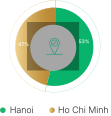
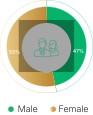
Total number of new hires during the year: 75 people
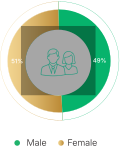
Structure of new hires by gender
Structure of new hires by region
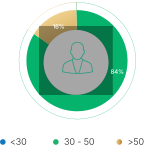
Structure of new hires by age
Total number and percentage of employee turnover during the reporting period,
by age group, gender, and region.
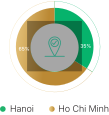
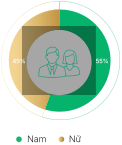
Total number of employees quitting the year: 97 people
Structure of employee turnover by gender
Structure of employee turnover by region
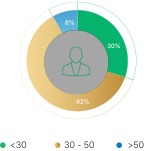
Structure of employee turnover by age
In 2025, BVSC experienced an employee turnover rate of 13.7%, which was mainly concentrated in
the brokerage team. Through periodic performance reviews and assessments of brokers’ job
performance based on KPI metrics, the Company proactively implemented workforce restructuring to
enhance the overall quality of its human resources.
401 - 2
Benefits for full-time employees, not for temporary or
part-time employees
Ha Noi
TP. Hồ Chí Minh
Life insurance
Yes
Yes
Healthcare services
Yes
Yes
Cancer insurance
Yes
Yes
Parental leave
Yes
Yes
Retirement benefits
Yes
Yes
Stock ownership
No
No
Other benefits
Monetary benefits provided to employees
Monetary benefits provided to employees
401 - 3
Parental leave
Male
Female
Total number of employees entitled to parental leave
136
158
Total number of employees on parental leave
3
11
Total number of employees returning to work during the reporting period after parental
leave
3
9
Total number of employees who returned to work and remained employed at the end of the
reporting period
3
8
(*) Decrease of one case due to an employee’s change in career orientation and voluntary
termination of the labor contract
Return-to-work rate of employees after parental leave
100%
100%
Retention rate of employees on parental leave
100%
89%
Occupational health and safety
GRI 3- 3: Management of material topics
3-3 a-b
Actual and potential impacts
Occupational Health and Safety is among the most critical aspects aimed at ensuring employees’
physical and mental well-being, while contributing to improved work performance, enhanced quality of
life for employees, and increased employee engagement with the Company. The establishment of a safe,
healthy, and friendly working environment also enhances the Company’s employer image and brand in
the labor market.
Due to the nature of its operations in the securities sector, the Company has almost no risks of
serious occupational accidents or occupational diseases. However, employees may still be exposed to
potential impacts on their health and well-being, such as work-related stress, psychological
pressure, common office worker illnesses such as back, neck, and eye pain, etc. Therefore, the
Company has focused on building a safe and healthy working environment and implementing
comprehensive health care programs for employees.
3-3 c
Policies and commitments
The Company is responsible for ensuring safe working conditions and for preventing and minimizing
impacts related to employees’ health and safety. This is achieved through the development and
implementation of specific occupational health and safety policies, clearly tailored to different
employee groups and levels. This approach helps employees feel secure and ensures their rights,
including:
Social insurance, health insurance, and unemployment insurance policies: The Company has
established a salary scale system based on specific job titles, serving as a basis for fully
implementing social insurance, health insurance, and unemployment insurance in accordance with
State regulations.
Other supplemental insurance policies: In addition to strictly complying with mandatory
insurance policies, the Company also implements other supplemental insurance programs to enhance
employee benefits. For over 16 years, the Company has implemented a health insurance program for
employees and has also provided a life insurance program for employees, offering both life
protection benefits and accumulated value, thereby ensuring financial security upon retirement.
Another supplemental program offered by the Company is K-Care cancer insurance. These insurance
programs have been maintained on an annual basis, forming a comprehensive healthcare benefits
package, enabling employees to focus on their work and fostering long-term commitment to
the Company.
Periodic health examination: Each year, the Company organizes periodic health check-ups for
employees at reputable international hospitals and clinics, in full compliance with legal
regulations. In addition to standard medical examinations, the Company provides enhanced cancer
screening services, enabling employees to monitor their health status and take timely action in
case of illness.
Facilities and working conditions: The Company provides a modern working environment that meets
Grade A office standards, with well-equipped facilities and advanced equipment, ensuring a
scientifically designed workspace. At the same time, the Company strictly adheres to occupational
safety and fire prevention standards to provide the best possible working conditions for
employees.
Employee engagement activities: Recognizing the importance of employee engagement as a key
component of employees’ mental well-being, the Company regularly collaborates with the Trade Union
and Youth Union to organize employee engagement activities, such as quarterly “Happy Friday”
events, sports tournaments, and outdoor physical activities, all of which foster a friendly and
cohesive working environment.
Sports and cultural activities: To promote employees’ mental and physical health, the Company
has established various sports and cultural clubs such as the Running Club, Yoga, Football, and
Pickleball. These not only help employees stay physically active but also create opportunities for
interdepartmental bonding and collaboration.
The Company is committed to ensuring that employees work in a safe environment, receive health care
and protection, and have financial security against unforeseen health-related risks.
3-3 d
Actions taken to manage impacts
In 2025, the Company implemented the following occupational health and safety activities:
BVSC fully complied with all legal requirements regarding social insurance, health insurance,
and unemployment insurance, ensuring timely and adequate protection of employee benefits as
required by law. At the end of 2025, the Company issued a new basic salary scale in compliance
with legal regulations to enhance employees’ insurance benefits. In addition, the Company
continued to renew comprehensive health insurance, cancer insurance, and life insurance contracts
for employees in accordance with the issued policies. In 2025, BVSC implemented an additional life
insurance program for key personnel and officially launched a voluntary pension insurance program
with Dragon Capital for employees.
Throughout the year, BVSC organized periodic health check-ups for employees at reputable medical
facilities, including T-Matsuoka Clinic (Hanoi) and University Medical Center 1 (Ho Chi Minh
City), which meet the standards of the Ministry of Health and deliver high-quality medical
services. In addition to the standard examination categories prescribed by the Ministry of Health,
BVSC also provided popular cancer screening tests to help employees proactively monitor and better
protect their health.
All BVSC’s offices are located in Grade A office buildings in both Hanoi and Ho Chi Minh City,
providing modern infrastructure and working conditions that meet occupational safety and fire
prevention standards. In 2025, BVSC completed the renovation of its Head Office Transaction Office
and Transaction Office No. 1 to higher office standards, creating a more positive working
environment for employees. The Company also renovated the Branch Office at 233 Dong Khoi to
accommodate functional changes following organizational restructuring.
Internal engagement activities continued to be emphasized through various programs such as Happy
Friday events and monthly birthday celebrations. Notably, a series of internal activities were
organized to celebrate the Company’s 26th anniversary, including sports competitions featuring
Pickleball tournaments at the Head Office and Pickleball and badminton tournaments at the Ho Chi
Minh City branch, an AI innovation contest, the Loyalty Reward program, and a writing competition
themed “Companion,” aligned with BVSC’s four key pillars for building a happy workplace: Physical
vitality – Mental resilience – Transparent rewards – Collaborative colleagues. In addition, BVSC
implemented the BVSC Milestones program in 2025 to recognize and motivate employees with highly
engaged employees. Effective internal communications play a vital role in fostering collective
strength and maintaining a stable, committed workforce.
BVSC also encouraged employees to maintain physical wellness through vibrant sports clubs.
Pickleball Club, Running Club, Football Club, Yoga Club, and Music Club offer a variety of
activities to promote both physical and mental well-being. In addition, in 2025, the Company
organized a first aid training workshop for employees, delivered by
Dr. TATSUO TAKAMA, Executive Director of the Japan Disaster Medical Assistance Team.
3-3 e
Tracking the effectiveness of the actions taken
The Company conducts surveys on employee satisfaction with employee welfare policies,
including insurance-related policies.
Based on survey results on welfare policies of enterprises in the market, the Company
compares these policies with the policies currently applied at BVSC.
3-3 f
Stakeholder feedback
Stakeholders
Responsibility
Executive Board
Approve insurance policies and budgets for employees.
Human Resources Department
Research and develop policies to propose to the Executive Board for implementation.
Directly implement insurance policies for employees
Implement arising tasks related to employee protection.
Executive Committee of the Trade Union
Propose and coordinate the development of insurance policies for employees and monitor
the implementation of those policies to protect the rights and benefits of employees.
Organize and maintain sports activities to improve employee health
BVSC, in collaboration with T-Matsuoka Clinic, organized a first aid training session
for employees
Occupational health and safety
403-1
Occupational health and safety management system
Due to the nature of its operations in the securities sector, the Company has almost no risks of
serious occupational accidents or occupational diseases. However, the Company still proactively
identifies, assesses, and controls occupational health and safety risks, including office safety
risks (such as fire prevention and fighting, electrical systems, and working conditions),
occupational health risks arising from prolonged use of information technology equipment (affecting
vision and musculoskeletal health), as well as mental health risks arising from work pressure and
market volatility.
On that basis, the Company implements appropriate control and preventive measures, such as
providing facilities that meet safe working standards, organizing periodic fire prevention and
firefighting training and drills, and conducting regular health check-ups for employees in
compliance with legal requirements. In addition, the Company implements programs to enhance
employees’ physical and mental well-being, and fosters a positive working environment by encouraging
work–life balance, thereby helping to mitigate negative impacts on employees’ health.
Occupational health and safety activities are implemented for all employees working at the Company.
As of the reporting date, there were no significant employee groups, activities, or workplaces
excluded from the Company’s occupational health and safety
management system.
403-4
Worker participation, consultation, and communication on Occupational health and
safety
At BVSC, employees are encouraged to proactively raise issues related to working conditions and
occupational health and safety through discussions with management, the Human Resources department,
the Trade Union Executive Committee, or by providing direct feedback at the annual employee
conference.
The Company ensures that employees are not subject to discrimination or any form of disadvantage
when providing feedback regarding occupational health and safety. Feedback is received, addressed,
and responded to in a timely manner, contributing to a safe working environment and towards
sustainable development.
In addition, the Company has established a network of occupational safety and hygiene officers with
the participation of employees from various departments. This network is responsible for supporting
the implementation of occupational health and safety activities, coordinating internal communication
to raise employees awareness, and participating in monitoring and proposing improvements to working
conditions.
Education and training
GRI 3-3: Management of material topics
3-3 a-b
Actual impacts and potential impacts
Training and human resource development are key factors enabling employees to enhance professional
knowledge, improve skills, and transform their mindset and work attitudes, thereby increasing
individual performance, improving the quality of products and services, and contributing to the
Company’s overall business performance.
In the context of rapid technological development, particularly artificial intelligence (AI),
training activities have become increasingly important, requiring employees to enhance their
adaptability and continuously update their knowledge in a timely manner to meet the increasingly
high demands of their work. At the same time, training and development programs provide
opportunities for employees to build career pathways, advancement opportunities, and long-term
development within the Company.
Training activities are considered an investment in employees and may pose a potential risk to the
Company due to employee turnover after training. Therefore, the key challenge for the Company is to
implement training activities with a focused orientation, aligned with practical needs and
integrated with employees’ career development pathways and promotion opportunities, thereby creating
motivation, retaining talent, and optimizing the effectiveness of training investment.
3-3 c
Policies and commitments
The Company proactively identifies training needs, develops training frameworks, and establishes
training policies and programs for employees based on different job titles and levels, linking
training activities with career development pathways, promotion policies, performance evaluation,
and reward and recognition systems to encourage employees to participate in training and enhance
their own capabilities.
Orientation training program: Training on the Company’s vision, mission, core values, history
and achievements, so that employees understand its culture and target values to connect each
employee with the Company’s development plans. In addition, employees are also trained on the
Company’s internal regulations, policies and code of ethics so that they can quickly adapt to the
new working environment and achieve success during their future association with the company.
Professional training program: The professional training program frameworks are built for each
specific division:
For brokerage division: Training for securities professional certification organized by the
SSC to apply for a practicing certificate; Internal training according to the training program
specifically developed for the brokerage team;
For support and management division: Training for securities professional certification
organized by the SSC to apply for a practicing certificate (depending on the positions as
required by law); Sponsoring employees to participate in professional certification training
such as CFA, ACCA, CMT, SHRM, etc.; other training courses as required by each specialized
position.
In addition, BVSC also implements training programs for university students preparing to
graduate, aiming to develop a high-quality future workforce, such as the “Next Gen” program
and the “From Learning to Earning” program.
Skills training program: Training on soft skills to improve work performance and adaptability to
changes in work; management & leadership skills for managers.
The Company is committed to implementing training programs in accordance with the annual training
plan and to facilitating employees’ participation in training programs to enhance their professional
competencies.
3-3 d
Actions taken to manage impacts
In 2025, the Company implemented several improvements in its training activities, aiming to enhance
the onboarding experience and increase engagement for new employees. Beyond the Onboarding training
sessions, new hires were provided with a Welcome Package (including a Welcome Card and guidance
materials), designed in an engaging and practical manner to align with operational realities and
ensure ease of understanding, thereby shortening the onboarding period and creating a more positive
impression and experience for new employees.
Professional training programs continued to be primarily focused on the brokerage division, in line
with the Company’s business strategy. The training contents include securities professional
certification training in accordance with regulatory requirements, as well as courses on operational
procedures, trading systems, new products and services, and analytical and customer advisory skills.
In addition, the Company continued to implement the “Next Gen” program in Hanoi and Ho Chi Minh City
to identify and train young talent, with updated program content to ensure alignment with changes in
regulations, procedures, and the program’s training objectives. During 2025, the Company also
implemented the “From Learning to Earning” program at various universities, enabling students to
gain early exposure to securities trading practices, thereby contributing to the long-term
development of the financial industry’s talent pool.
Furthermore, the Company regularly assigned employees to participate in external training courses
and professional seminars to update knowledge and enhance working capabilities, particularly in
areas such as the application of artificial intelligence (AI) in management, risk management, and
customer service and development skills. Employees were also encouraged to proactively enhance their
capabilities by participating in international professional certification programs such as CFA, CMT,
and IIA, among others, by providing support for related expenses.
In 2025, the Company also organized information security awareness training programs for employees
in Hanoi and Ho Chi Minh City, while promoting a culture of compliance across the organization. This
activity helps raise awareness, ensure information security, and support sustainable business
operations.
3-3 e
Tracking the effectiveness of the actions taken
The Company monitors and evaluates the effectiveness of its education and training activities
through key indicators, including: Total training hours, Total training expenditure, and Average
annual training hours per employee categorized by function and hierarchical level, as well as
results from periodic assessments for brokerage staff.
Additionally, the Company evaluates participation in mandatory training programs for each position
based on data from the human resource management system, issues notifications to employees who have
not completed the required programs, and leverages the E-learn system to assess the proactiveness in
interaction and self-learning of employees.
Participation in mandatory training will be one of the factors considered in personnel evaluation
for the employee appointment, annual performance reviews, thereby fostering a culture of learning
and continuously enhancing the quality of the Company’s human resources.
3-3 f
Stakeholder feedback
Stakeholders
Responsibility
Executive Board
Approve training plans and programs.
Human Resources Department
Responsible for proposing, organizing, and coordinating the implementation of training
programs based on both planned and
ad-hoc requirements
Directly build/coordinate with departments or partners to develop and organize
training programs.
Operational Departments
Coordinate with the Human Resources Department and/or partners to develop internal
training programs for employees.
Internal trainers
Responsible for delivering and implementing internal training activities.
Education and training
404-1
Average number of training hours per year per employee
Average hours of training performed by the organization’s employees during
the reporting period, by employee function.
Functions
Gender
Average training hours
Sales
Male
85.48
Sales
FeMale
76.59
Management and support
Male
15.42
Management and support
FeMale
12.16
Average hours of training performed by the organization’s employees during
the reporting period, by employee level.
Functions
Gender
Average training hours
Employee
Male
79.77
Employee
FeMale
59.02
Manager
Male
8.21
Manager
FeMale
12.36
The total number of training hours in 2025: 15,557 hours,, including 12,285 hours of internal
and
on-the-job training.
Total training costs in 2025: VND 1.4 billion.
In 2025, the Company continued to focus on training for the brokerage team in alignment with
the Company’s business development orientation. At the same time, the Company intensified the
implementation of wide-scale information security training for all employees. As a result, total
training hours at the staff level increased significantly compared to 2024 (up 6% year-on-year).
Training hours between male and female employees showed no significant disparity across
functional groups and job levels, indicating that access to training opportunities was ensured
equitably without gender discrimination, thereby laying a solid foundation for the Company’s
harmonious and sustainable development in the future.
404-2
Employee upskilling and reskilling programs
The Company implemented training and development programs aimed at enhancing employees’
professional expertise, vocational skills, and the adaptability of its workforce.
For brokerage division:
For newly recruited, inexperienced employees: The Company continued to implement the “Next Gen”
program in Hanoi and Ho Chi Minh City to identify and train young talent. The program content is
regularly updated to align with changes in regulations, processes, and training objectives.
For existing employees: The Company regularly organized training programs on products, services,
processes, and systems, primarily delivered through the e-learning platform, enabling employees to
participate proactively and improve the effectiveness of knowledge retention. In addition,
training courses on customer service and client development skills were also implemented to
enhance service quality and work performance.
For other departments:
The Company encourages and facilitates employees’ participation in international professional
certification programs relevant to their areas of expertise, such as CFA, ACCA, CPA, CMT, and SHRM,
through financial support policies.
For managers:
The Company sent its staff to seminars to update regulations and/or new trends in the market,
receive leadership skills training, training programs for managers, etc.
Furthermore, the Company organized training programs on the application of Artificial Intelligence
(AI) in the workplace and facilitates employee participation in related seminars and AI competitions
launched by Bao Viet Holdings, thereby enhancing adaptability to the rapid advancement of
technology.
404-3
Percentage of employees receiving periodic reviews on performance
and career development
Employee classification
% Male
% FeMale
Employee
100
100
Manager
100
100
Diversity and equal opportunity
GRI 3-3: Management of material topics
3-3 a-b
Actual impacts and potential impacts
Diversity and equal opportunity in the workplace play an important role in enhancing the quality of
human resources and the Company’s operational efficiency. Ensuring diversity in terms of gender,
age, and experience fosters a variety of complementary perspectives during work processes and
decision-making. In addition, building a fair and non-discriminatory working environment contributes
to attracting and retaining employees, while also strengthening engagement, collaboration among
individuals within the organization, and overall employee satisfaction.
In cases where workforce structure is unbalanced or development opportunities are not evenly
distributed, risks may arise related to discrimination, violations of gender equality regulations,
decreased motivation, and increased staff turnover.
Therefore, promoting diversity and ensuring equal opportunities are key factors in enabling the
Company to develop a sustainable workforce, enhance governance effectiveness, and strengthen its
market reputation.
3-3 c
Policies and commitments
Currently, policies related to recruitment, training and development, performance evaluation, and
compensation fully reflect the Company’s commitment to diversity and equal opportunity. At BVSC,
diversity and equal opportunity are reflected in all daily business activities and have become an
integral part of the Company’s corporate culture.
Policies
For recruitment policies: The Company ensures that the recruitment process was conducted
transparently, without discrimination based on gender, religion, or ethnicity. All candidates have
the opportunity to access suitable positions based on their abilities and development potential.
For human resource training and development, staff planning and appointment policies:
The Company implements human resource training and development policies based on the principle of
fairness, ensuring that all employees have equal access to training programs and advancement
opportunities, regardless of gender, age, position, or contract type. Training programs are
designed based on competency frameworks and job requirements to ensure transparency and alignment
with each individual’s career development path. Personnel planning and appointment are carried out
transparently and fairly, based on competence and actual contributions, creating development
opportunities for everyone.
For employee salary, bonus and welfare policies: The Company’s compensation, bonus, and
welfare policies are applied uniformly to all employees, without discrimination based on gender,
religion, or ethnic minority. Moreover, BVSC has tailored policies specifically for female
employees. In addition to statutory maternity benefits, the Company offers additional support such
as: one-hour breaks during the breastfeeding phase, additional maternity benefits under the health
insurance plan, 10-minute daily breaks for five consecutive days each month, special recognition
and appreciation on occasions such as International Women’s Day (March 8) and Vietnamese Women’s
Day (October 20), etc.
Commitments
The Company is committed to building a comfortable and safe working environment where employees are
respected, treated equally, provided with opportunities for development based on their competencies,
and recognized for their contributions.
3-3 d
Actions taken to manage impacts
To ensure that the principles of diversity and equal opportunity are effectively implemented in
practice, the Company has carried out human resource management activities in a transparent, fair
manner, and in accordance with the specific characteristics of each function.
For recruitment: The Company establishes candidate selection criteria based on job requirements and
individual competencies for each position, ensuring equal access to recruitment opportunities.
Recruitment information is publicly posted on the Company’s website and job portals. The recruitment
process includes professional tests, assessment rounds, and interviews with the participation of
relevant departments, ensuring objectivity and minimizing potential bias.
For human resource training and development, staff planning and appointment: Training and
development programs are implemented in accordance with annual plans and aligned with the needs of
each department and job position. Performance evaluation is conducted based on clear criteria and
serves as a basis for bonus and salary adjustments. Succession planning and appointment decisions
are considered based on competence and performance, job performance over a review cycle, and
assessments of future potential, carried out in accordance with the Company’s regulations, thereby
ensuring equal promotion opportunities for employees.
Salary, bonus payments, and welfare policies are implemented consistently in accordance with
approved policies and applied uniformly across the Company, ensuring that employees receive full
benefits without discrimination.
These activities are carried out in coordination with relevant departments to build a diverse,
equitable working environment and create development opportunities for all employees. At the same
time, the Executive Committee of the Trade Union plays a supervisory role in the implementation of
labor policies, accompanying and protecting the legitimate rights and interests of employees.
3-3 e
Tracking the effectiveness of the actions taken
The Company monitors and evaluates the effectiveness of its diversity and equal opportunity
initiatives through key indicators, including: workforce structure by gender, the ratio of employees
participating in training programs/number of training hours by gender, the gender pay and income
gap, and other relevant personnel data. This information is fully reflected in the Company’s annual
periodic human resources reports.
In addition, employee feedback collected through direct line managers or the Executive Committee of
the Trade Union serves as a basis for identifying emerging issues (if any) and ensuring timely
resolution.
3-3 f
Stakeholder feedback
Stakeholders
Responsibility
Executive Board
Ensure that employee-related policies are developed in a fair, transparent, and
non-discriminatory manner.
Fosters a corporate culture based on the principles of diversity and equal opportunity
across all Company activities.
Human Resources Department
Responsible for advising on the development of HR policies, as well as implementing and
coordinating their execution, to ensure alignment with the principles of diversity and equal
opportunity.
Operational Departments
Directly responsible for implementing HR policies and daily human resource management
activities in accordance with the principles of diversity and equal opportunity.
Executive Committee of
the Trade Union
Represents employees by contributing feedback during the development of policies
related to the workforce.
Accompany employees in protecting their legitimate rights and interests.
Employees
Responsible for complying with regulations and standards of conduct, respecting
differences, and refraining from discriminatory behavior in the workplace.
Participate in providing feedback to help the Company identify and address issues in a
timely and effective manner..
Diversity and equal opportunity
405-1
Diversity of managers and employees
Percentage of individuals in management level of the
organization
Gender
Age
Percentage of individuals in employee level
Gender
Other diversity indicators if relevant
(such as minority or vulnerable groups)
Age
Number of employees from
minority groups: 03 people
405-2
Ratio of basic salary and remuneration of women compared to men
The Company’s workforce structure clearly reflects diversity and equality through a balanced gender
distribution across job levels and a rational distribution by age. The proportion of female
employees is slightly higher than that of male employees, although the difference is not
significant. The Company’s management team is primarily concentrated in the 30–50 age group, which
enables the effective utilization of professional experience, managerial capabilities, and
adaptability to changes in the market and technology. At the staff level, the age structure is more
diverse, with employees under 30 accounting for a significant proportion. In recent years, the
Company has intensified recruitment of young talent to build a succession pipeline, while also
recording workforce stability as employees tend to remain with the Company long-term and gradually
transition into higher age groups. The Company has signed labor contracts with three ethnic minority
employees. Diversity in gender and age contributes to a harmonious working environment, leveraging
individual strengths and supporting the Company’s sustainable development.
Regarding compensation policy, the Company applies a unified remuneration principle with no gender
discrimination, based on job position, competencies, and performance results. According to the
reporting period data, the income ratio of female to male employees in both Hanoi and Ho Chi Minh
City is higher across both staff and management levels. This difference is mainly attributed to the
fact that employees’ income is linked to business performance and actual contributions, whereby
female employees achieved higher performance-based bonuses than male employees. This further
demonstrates the Company’s commitment to ensuring gender equality in compensation policies.
Local communities
GRI 3-3: Management of material topics
In recent years, along with promoting and developing business activities,
Social Security has always been a matter of concern for BVSC, considering it a goal, an important task in
the sustainable development strategy, as well as its responsibility to the community.
At BVSC, social welfare programs are implemented with a focused approach and
clear objectives. These include investment in education and youth development, poverty alleviation, medical
care, and honoring meritorious service to the revolution. As a committed partner, BVSC consistently strives
to uphold and enhance its responsibility toward the sustainable development of the broader community.
3-3 a-b
Actual impacts and potential impacts
BVSC’s community activities have generated positive impacts through support for various beneficiary
groups, including:
Investment in the future generation (support for education, students, and pupils);
Gratitude to families with revolutionary merits;
Poverty alleviation, disaster and epidemic relief, and healthcare support.
These activities contribute to improving living conditions and supporting vulnerable groups.
However, there remain risks regarding resource allocation, and the long-term impact effectiveness
has not yet been fully measured.
3-3 c
Policies and commitments
BVSC is committed to fulfilling its corporate social responsibility through transparent programs
that are appropriately targeted and aligned with actual needs. The Company often directly organizes
social security activities or cooperates with Bao Viet Holdings and relevant stakeholders to enhance
implementation effectiveness.
3-3 d
Actions taken to manage impacts
Community activities are managed through the Trade Union under the direction of the Board of
Directors and the Executive Board. Programs are planned, implemented and budgeted. After
implementation, all program results and actual costs are publicly disclosed in the summary meeting.
In 2025, BVSC continued to maintain its social welfare programs across key focus areas, ensuring
that resources were used effectively and aligned with intended objectives. Centralized and planned
management helps ensure that resources are utilized for the right purposes, directed to the
appropriate beneficiaries, and aligned with the Company’s overall strategic orientation.
3-3 e
Tracking the effectiveness of the actions taken
The Company has not yet had a formal mechanism for evaluating the effectiveness of the management
approach. However, all of the Company’s annual Social Security programs are planned, implemented,
organized as well as summarized and evaluated after completion. In addition, the company recognizes
the effectiveness of the implemented programs through feedback from superior organizations and
through social media.
The Company plans to establish an effectiveness evaluation mechanism for the management approach
and promulgate it in the near future.
3-3 f
Stakeholder feedback
BVSC collects feedback from stakeholders, including regulatory authorities, mass organizations,
partner units, beneficiary communities, and employees through program implementation, collaborative
activities, and official communication channels. Feedback is consolidated and utilized to adjust the
content and implementation methods of programs, enhance support effectiveness, and improve the
management and evaluation of community activities.
SOCIAL SECURITY PROGRAMS
BVSC presented gifts to students as part of the “Bringing Warmth to the Highlands” program in
2025
INVESTING IN EDUCATION AND YOUTH
2025 Bringing Warmth to the Highlands
The “Bringing Warmth to the Highlands” program in 2025 continued to be implemented with a
focus on enhancing the sustainability of support activities, prioritizing investment in
essential infrastructure and facilities, contributing to improving living and learning
conditions for local communities, alongside the provision of gifts and essential supplies to
students. The 2025 program was held at Lao Chai Semi-boarding Primary and Secondary School
for Ethnic Minority Students, Lao Chai Commune, Tuyen Quang Province (formerly under Vi
Xuyen District, Ha Giang Province), on November 14, 2025. This also marked the third time
BVSC returned to Ha Giang Province to continue supporting highland students. Based on
assessments of damage caused by Storms No. 10 and No. 11, BVSC supported the renovation and
reconstruction of school facilities, contributing to improved living conditions for both
students and teachers. In addition, BVSC sponsored equipment for boarding activities and
provided gifts to 629 students of the school. The total program budget was approximately VND
300 million.
INVESTING IN POVERTY ALLEVIATION AND MEDICAL SUPPORT
Call for support for the people of Cuba on the occasion of the 65th
anniversary of Vietnam–Cuba diplomatic relations (1965–2025)
Toward the 65th anniversary of diplomatic relations between Vietnam and Cuba, BVSC launched
an internal fundraising program to support the Cuban people in overcoming difficulties
caused by natural disasters and economic challenges. The initiative raised over VND 50
million through contributions from employees and was delivered through the Vietnam Red Cross
Society. Through this initiative, BVSC affirmed its commitment to social responsibility and
the spirit of solidarity, while contributing to strengthening the traditional friendly
relationship between the two nations.
“Eliminating temporary and dilapidated housing” Program
In line with the Government’s policy on the nationwide “Eradicating temporary and
dilapidated housing” program, in 2025, BVSC collaborated with the Red Scarf Fund to provide
financial support for the construction of two houses for disadvantaged students in Chieu Vu
Commune, Bac Son District, Lang Son Province. This initiative contributed to improving
housing conditions for disadvantaged students in the locality.
BVSC accompanies the “Spring bus journey” program 2026
In 2025, BVSC continued for the second consecutive year to accompany the “Spring bus
journey” program for the 2026 Lunar New Year, contributing VND 50 million to support
students and workers in difficult circumstances to return to their hometowns for Tet. The
program was organized by the Ho Chi Minh Communist Youth Union, the Vietnam National Union
of Students in Ho Chi Minh City, and the Ho Chi Minh City Student Support Center. This
initiative contributed to spreading the spirit of sharing, strengthening community bonds,
and demonstrating BVSC’s commitment to corporate social responsibility.
Supporting those in difficult circumstances
In 2025, BVSC continued to expand its social security efforts with a long-term and more
consistent orientation. Notably, the Company maintained its monthly living expense support
program for disadvantaged households in Hoan Kiem Ward, Hanoi. This activity contributed to
improving the living conditions of residents and reflects the Company’s strong connection
with the communities in which it operates.
DISASTER RELIEF AND ENVIRONMENTAL SUPPORT
Supporting people affected by natural disasters
In 2025, faced with the severe damage caused by successive storms and floods in many
localities, BVSC promptly implemented support activities to assist residents in overcoming
the consequences of natural disasters, with key focus including:
In response to the call of the Vietnam Fatherland Front, BVSC mobilized its employees to
actively contribute and also allocated more than VND 400 million from the Company’s
welfare fund.
In addition, the Company provided financial support to repair houses for 09 households
whose homes were severely damaged or swept away by Storm No. 11 in Than Sa Commune (Vo
Nhai District, Thai Nguyen Province), which was heavily affected by flooding.
Through these activities, BVSC aims to share the burdens faced by residents in affected
areas while demonstrating the corporate responsibility of the business toward the community
and society.
BVSC Youth Union organized an incense
offering ceremony at Vi Xuyen Martyrs’ Cemetery
GRATITUDE TO INDIVIDUALS WITH REVOLUTIONARY MERITS
Visiting and presenting gifts to families with contributions to the
Revolution
Every year, on the occasion of Invalids and Martyrs’ Day (July 27), the Company organizes
meaningful activities to pay tribute to the generations who dedicated themselves and
sacrificed for national independence. The Company’s leadership directly visited and
presented gifts to the families of officers and employees who are families with
revolutionary merits.
APPENDIX I:
MANAGEMENT QUALITY
SCORE BY CAMEL
No.
Name of indicators
Value
Score 2024
Score 2025
Weight
1
Number of years of leadership (on the Board of Directors/Management) in the financial/securities
sector of the Chairman of the Board of Directors.
Over 5 years
100
100
4%
2
Number of years of leadership (on the Board of Directors/Management) in the financial/securities
sector of the Director/General Director.
Over 5 years
100
100
6%
3
Number of years of experience in financial/securities sector of the Chairman of the Board of
Directors.
Over 7 years
100
100
4%
4
Number of years of experience in the securities sector of the Director/General Director.
Over 7 years
100
100
6%
5
Stability of key leadership positions (Chief officer (CEO, CFO), Deputy Director, Head of
departments) in the last 3 years. Calculated by the total number of personnel changes in these
positions (turnover)/total number of positions.
0%
80
100
4%
6
Completeness of professional procedures according to the provisions of securities law and the
statutes of Exchange and Securities Depository Center.
Fully issued, meeting actual needs.
100
100
5%
7
Risk management policy for all activities.
An independent risk management department has been established, policies have been fully
promulgated, meeting actual requirements.
100
100
5%
8
Assessment of the operational capacity of the inspection and internal control department.
Established, fully meeting the requirements for effective operation.
100
100
5%
9
Assessment of the quality of control of investors' securities trading deposits.
The company has a management process for investors' deposits so that they are strictly controlled
and managed.
100
100
5%
10
Level of transparency of financial information.
Financial information is disclosed fully and promptly on mass media and there are no material
amendments after the date of publication.
100
100
6%
11
Number of years in operation.
Over 7 years
100
100
6%
12
Proportion of stock trading volume conducted through the company (on two exchanges)/Total market
trading volume (total trading volume on two exchanges).
From 1% to less than 2%.
80
60
8%
13
Modernity of the information technology system.
Online trading system, internal management information system MIS.
80
80
5%
14
Company's equity size compared to the general level.
The remainder
50
50
5%
15
Stability and potential growth (or decline) of equity in the next 2 years. (A capital increase plan
with the possibility of profit or loss).
There are clear capital increase plans and prospects with high feasibility.
100
100
4%
16
Stability and sustainability of growth, reflected in the average revenue growth rate in the 3 most
recent reporting periods (6 months).
From 5% to 10%
60
60
6%
17
Use of the Securities Depository Center's settlement support fund due to insufficient funds for
clearing securities transactions.
Do not use
100
100
5%
18
Compliance with (violations of) legal regulations in the securities sector and stock market in the
last 6 months.
No violations
100
100
6%
19
Number of licensed operations of the Company.
4 operations
100
100
5%
Total Score
91.7
90.9
APPENDIX II:
FINANCIAL PERFORMANCE SCORE UNDER CAMEL
No.
Financial indicators by CAMEL
Rate
Score
Weight
Year 2024
Year 2025
Year 2024
Year 2025
1
C1 = Equity/Total assets
44.0%
37.8%
20
20
10%
2
C2 = Equity/Legal capital
990.1%
1,062.7%
100
100
10%
3
C3 = Available capital adequacy ratio
624.0%
584.0%
100
100
10%
4
A1 = Risk-adjusted total asset value/
Total assets (excluding fixed assets)
Combining both financial and management factors, the Company is classified as Rank A due to the total
rating score of 84.67 points. Meeting the criteria for a total score of 80 points or higher and
no CAMEL factor score below 65 points.
Notes: RANK A: The Company’s total rating score is 80
points or higher and no CAMEL factor score is below 65.
Statement of reporting in accordance with GRI Standards
BVSC’s Sustainability Report covers the period from January 01, 2025, to December 31, 2025. This report has been prepared (with reference to the GRI Standards 2021)
Reporting principles
BVSC determines the Sustainability Report content by adhering to the reporting principles defined in the GRI Standards:
Sustainability context:
In 2025, sustainability evolved from a voluntary initiative into a regulatory mandate, driven by increasingly stringent global ESG disclosure standards. Net-zero commitments have materialized via policies and green technical barriers, with the Carbon Border Adjustment Mechanism (CBAM) being finalized by the European Union before official application in 2026, forcing companies to increase transparency in emissions of all value chains. In addition, green financial capital flows continued to be allocated selectively, prioritizing organizations and companies with clear climate risk management capacity and sustainable development strategies.
In Vietnam, 2025 marked significant progress in perfecting the green finance legal framework, facilitating capital mobilization for green growth and energy transition. Meanwhile, ESG disclosure requirements for listed companies were enhanced, not only to meet regulations but also to become a material factor for investors to assess transparency, governance capability, and adaptability to non-financial risks.
Furthermore, in February 2026, the State Securities Commission, in collaboration with the International Finance Corporation, announced the Vietnam Corporate Governance Code (CG Code 2026), comprising 9 principles, covering the core contents of modern corporate governance. A prominent highlight of this code is the enhanced integration of sustainable development and ESG factors into the governance framework. Accordingly, the Board of Directors is recommended to proactively consider environmental and social risks and opportunities, especially climate change risks, during the process of strategic planning and oversight of corporate operations. This is considered a significant step forward, bringing Vietnam closer to international practices and the sustainable disclosure standards currently being applied globally.
In this context, financial institutions, including securities companies, are playing an increasingly important role in driving capital flows toward sustainable investment activities. With a sustainable development orientation persistently pursued over many years, BVSC continues to strive for maintaining stable growth, enhancing service quality and corporate governance, while actively contributing to the community and the sustainable development of the financial market.
Completeness: The information presented in the report utilizes full data with a clear topic scope and a clear time boundary.
Accuracy: All information provided in the report is specifically measured and calculated. Any estimation within the scope of this report is minimized.
Balance: The report is considered to disclose information transparently, covering both positive and negative indicators (if any).
Clarity: The report is interpreted and uses understandable language, minimizing the use of technical terms.
Comparability: Most of the figures in the report are compared to the same period last year.
Timeliness: The report was prepared in March 2026 to disclose data within the period from January 01, 2025 to December 31, 2025 to ensure timeliness and the most up-to-date information possible.
Verifiability: Information in the report is collected and synthesized from internal data systems, ensuring that it can be retrieved, cross-referenced, and verified when necessary.
GRI Content Index
This report is prepared with reference to the GRI Standards 2021, including disclosures in accordance with the following standards: GRI 2: General Disclosures; GRI 3: Material Topics; GRI 201: Economic Performance 2016; GRI 301: Materials 2016; GRI 302: Energy 2016; GRI 303: Water and Effluents 2018; GRI 305: Emissions 2016; GRI 401: Employment 2016; GRI 403: Occupational Health and Safety 2018; GRI 404: Training and Education 2016; GRI 405: Diversity and Equal Opportunity 2016; GRI 413: Local Communities 2016.
Economy
SDGs
8
Decent Work and Economic Growth
16
Peace, Justice and Strong Institutions
GRI standards
Actual goals
Achievements
Maintaining the position as a leading securities company in the market, aiming for stable economic growth coupled with long-term benefits for customers, shareholders, employees, and the community.
The Company maintains stable and efficient economic growth:
Total revenue and other income in 2025: VND 1,104.66 billion, up 8.7% year-on-year.
Profit after tax in 2025: VND 224.5 billion, up 12% year-on-year; of which, realized profit after tax was VND 204.4 billion, down 1% YoY.
In 2025, the Company focused on upgrading its information technology systems and completing the connection to the KRX trading system, thereby supporting the development of competitive products and services and enhancing value for customers; at the same time, it improved welfare policies and compensation schemes, contributing to the creation of a safe and happy working environment for employees.
Corporate governance alignment with international best practices.
Full protection of shareholders’ right to information through accurate, complete, transparent, and fair disclosure in accordance with legal regulations.
Environment
SDGs
3
Good health and well-being
7
Affordable and
clean energy
12
Responsible
consumption and
production
GRI standards
Actual goals
Achievements
Ensuring efficient and economical use of energy, water, and materials (paper) in daily operations.
Promoting initiatives for improvement, cost-efficiency, and waste prevention.
Implementing procurement and upgrades of equipment and technology for resource efficiency and waste prevention.
Successful maintenance of the 5S policy, enhancing staff awareness of office hygiene and environmental protection.
Zero recorded violations of environmental laws and regulations.
Maximizing control over emissions discharged into the environment.
BVSC consistently equips and operates a modern transportation fleet that meets all State emission and registration standards.
On-schedule maintenance, repair, and upgrade of equipment according to supplier guidelines to ensure high performance and energy efficiency.
Active promotion of public transportation usage among employees to reduce CO2 emissions.
Monthly monitoring of electricity and fuel consumption.
Society
SDGs
1
No poverty
2
Zero hunger
3
Good health and well-being
4
Quality education
5
Gender equality
8
Decent work and economic growth
10
Reduced inequalities
GRI standards
Actual goals
Achievements
Organizing charitable programs to support impoverished households and communities in disadvantaged areas or regions affected by natural disasters and floods.
Donating essential supplies to poor households, near-poor households, and policy-beneficiary families nationwide.
Throughout 2025, BVSC launched multiple community initiatives, such as: providing monthly living allowances, house construction and repair support, and essentials for disadvantaged families; improving school facilities and giving gifts to students; performing “gratitude” programs; and mobilizing relief funds for victims of natural disasters and floods. Total budget exceeded VND 1 billion.
Active response to and partnership with the Government in the “Eliminating Temporary and Dilapidated Housing” program. In 2025, the Company financed the construction of 02 houses in Lang Son and 09 houses in Thai Nguyen, helping disadvantaged households stabilize their lives.
No significant negative impacts on local communities.
Expanding job opportunities, developing a succession pipeline, and enhancing HR quality and employee well-being for a happy workplace.
New hire rate during the year: 11%.
Average income per employee: VND 39 million/person/month, up 15% YoY.
100% of personnel receiving full welfare benefits in accordance with issued policies.
Action Goal: Enhancing workplace safety and employee health protection; ensuring financial peace of mind against medical contingencies.
100% of personnel participating in social, health, and unemployment insurance.
Implementation of supplementary insurance programs for employees:
Implementation of the BVSC Milestones program and expansion of eligibility and conditions for birthday leave benefits.
Annual health check-ups.
Ongoing facility renovation and procurement of new tools and equipment to enhance the workplace environment.
Training a workforce with high professional expertise and skills, capable of adapting to change.
Total training hours: 15,557 hours, up 6% year-on-year.
Total training enrollments: 480, up 8% year-on-year.
Total certified securities professionals: 173 people, up 5% year-on-year.
Total training costs: VND 1.4 billion.
Building a diverse and equitable work environment where employees are respected and empowered to reach their full potential.
Non-discrimination based on gender, religion, and ethnicity in all HR policies.
Female labor ratio of 50% of the total workforce.
Women in leadership positions: 45%.
Ethnic minority staff: 03.
GENERAL DISCLOSURES
Stakeholder feedback
Approach to stakeholder engagement
Stakeholder groups
Communication / Engagement channels
Frequency
Shareholders/Investors
General Meetings of Shareholders.
Investor Relations Department (email / hotline).
Investor Newsletter.
Direct and / or online meetings with investors.
Stock exchanges and media publications.
Engagement, collaboration, and investor outreach programs.
Company website, official fanpage, and Zalo channels.
Annually or on an ad hoc basis (General Meetings of Shareholders).
Ongoing / as needed (responding to inquiries, meetings with investors).
Quarterly (Investor Newsletter).
Customers
Brokerage and advisory staff.
Direct and / or online interactions through trading platforms.
Customer appreciation conferences / events.
Digital Customer Care Center.
Investment analysis and recommendation seminars / webinars.
Other communication channels (Website, email, telephone, social media).
Daily / ongoing.
Annually (Customer conferences).
Periodically or on an ad hoc basis (webinars, customer care activities).
Regulatory Authorities
Compliance with periodic, ad hoc, and regulatory-required reporting and
information disclosure obligations.
Participation in conferences, workshops, and training programs organized
by regulatory authorities.
Direct and / or online engagement.
Other communication channels (Website, email, telephone).
Periodically in accordance with regulatory requirements.
As required or upon request.
Associations
Regular association activities.
Participation in conferences, forums, and events.
Discussion and feedback through periodic association programs.
Periodically.
As programs or events arise.
Media
Press conferences (in-person / online).
Annual media briefings / meetings with journalists.
Direct engagement through interviews and media networking activities.
Annually.
As events arise / as needed.
Employees
Regular and / or on-demand workplace dialogue, and the annual Employee Conference.
Periodic mid-year and year-end review meetings.
Engagement through direct line managers.
Engagement through the Trade Union and the Human Resources Department.
Corporate culture training programs.
Internal dialogues and internal training programs.
Internal communication channels (Email, Fanpage, Zalo).
Annually (Employee Conference).
Periodically or as part of specific programs (e.g. Happy Friday events, year-opening gatherings).
Ongoing / daily.
Local Communities
Through local authorities / host authorities.
Through the Company’s publications and newly launched products.
Through communication channels and social media platforms (Website, Fanpage, Zalo).
When activities are carried out.
Ongoing.
GENERAL DISCLOSURES
Stakeholder feedback
Key stakeholder concerns and BVSC’s responses
BVSC maintains regular engagement with stakeholders to understand their key concerns and expectations. Through diverse engagement channels, the Company collects stakeholder feedback and implements appropriate measures to enhance operational effectiveness, while contributing to the sustainable development of the market and the community.
Stakeholder groups
Key concerns
BVSC’s responses and actions
Shareholders/Investors
Business performance efficiency; transparent information disclosure; strengthened corporate governance; corporate value growth; and a stable dividend policy.
Completion of the business plan approved by the General Meeting of Shareholders; transparent disclosure and equitable treatment of shareholders; strengthened corporate governance and professional investor relations; a stable dividend policy; and diversified channels for investor engagement.
Regulatory Authorities
Legal compliance; fulfillment of tax obligations; strict adherence to laws, regulations, and directives issued by competent authorities; and contributions to the development of Vietnam’s stock market.
Full compliance with laws and tax obligations; transparent and timely information disclosure; active participation in regulatory forums and contributions to the development of the market’s legal framework; and active engagement in stock exchange activities.
Associations
Active participation in professional association activities; fulfillment of membership obligations.
Active membership and participation in professional associations, including the Vietnam Bond Market Association, the Vietnam Association of Securities Business, and the Vietnam Association of Financial Investors.
Fulfillment of financial obligations in accordance with association regulations.
Customers
High-quality services at competitive pricing.
Convenient transaction locations.
Secure, safe, and user‑friendly trading activities.
Friendly, open, and dedicated staff.
A diverse range of products catering to the needs of different customer segments.
Enhancement of human resource capacity and the quality of investment research and recommendations.
Competitive and flexible pricing and margin policies.
Expansion of transaction infrastructure and network.
Comprehensive upgrade of the Bwise online trading platform and launch of the BVSC Invest App with enhanced features and non‑prefunding services.
Implementation of promotional programs and customer appreciation events throughout the year, including initiatives in celebration of the Company’s 26th anniversary and customer engagement programs within the Bao Viet ecosystem during the Group’s 60th anniversary, to strengthen customer relationships.
Delivery of market insights through the “Market Decoding” series and “Trend Decoding” webinars.
Strengthened digital customer service through the Digital Customer Care Center.
Increased investment in information security and protection of customer data.
Media
Timely and convenient access to information on the Company’s activities.
Collaboration with media agencies in market communication and information dissemination.
Proactive disclosure of periodic business performance press releases; transparent and timely updates on corporate events and activities; provision of market analysis and insights; and participation of Company experts in media interviews and engagements.
Employees
Employment security and workforce stability and development.
Employee health and well‑being, including safe and healthy working conditions.
Opportunities for training and personal development.
Equal and fair development opportunities with recognition of contributions and achievements.
Stable, competitive income.
A fair and professional working environment.
Expansion of business operations to create stable employment opportunities for employees.
Implementation of structured recruitment and training programs to develop a proactive talent pipeline and ensure workforce quality.
Effective business performance to secure stable income for employees and improve their standard of living.
Development of competitive and market-aligned remuneration and reward policies linked to performance and fairness.
Provision of comprehensive employee benefits, including health insurance, life insurance, cancer insurance, in addition to statutory social insurance, health insurance, and unemployment insurance.
Allocation of budget for training and development to encourage employees to enhance professional qualifications through role-specific training programs.
Investment in and facilitation of Trade Union and Youth Union activities to foster a friendly and open working environment.
Development of employee-related policies aimed at internal equity and external competitiveness.
Maintenance of a 5S-standard working environment.
Local communities
Basic living conditions for remote and disadvantaged communities.
Investment in education and future generations.
Disaster relief and post‑disaster recovery support for affected localities.
Compliance with regulations on environmental protection and energy conservation.
Support and care for patients in disadvantaged circumstances.
Implementation of annual social welfare programs, with a focus on investment in future generations, recognition of families of national contributors, and poverty alleviation.
Support for local communities through contributions to the development of basic living infrastructure and healthcare services for people in remote and disadvantaged areas.
Active coordination with Bao Viet Holdings in implementing group‑wide community and social programs.
Compliance with local authorities’ regulations on environmental protection.
Implementation of solutions within business operations to promote the efficient use of electricity and water.
BVSC establishes transparent supplier evaluation and selection processes; contracts are subject to legal review prior to execution and are monitored throughout the implementation process.
SOCIAL SECURITY PROGRAMS
2025 Bringing Warmth to the Highlands
The “Bringing Warmth to the Highlands” program in 2025 continued to be implemented with a focus on enhancing the sustainability of support activities, prioritizing investment in essential infrastructure and facilities, contributing to improving living and learning conditions for local communities, alongside the provision of gifts and essential supplies to students. The 2025 program was held at Lao Chai Semi-boarding Primary and Secondary School for Ethnic Minority Students, Lao Chai Commune, Tuyen Quang Province (formerly under Vi Xuyen District, Ha Giang Province), on November 14, 2025. This also marked the third time BVSC returned to Ha Giang Province to continue supporting highland students. Based on assessments of damage caused by Storms No. 10 and No. 11, BVSC supported the renovation and reconstruction of school facilities, contributing to improved living conditions for both students and teachers. In addition, BVSC sponsored equipment for boarding activities and provided gifts to 629 students of the school. The total program budget was approximately VND 300 million.
Within the framework of the program, the BVSC delegation organized an incense-offering ceremony at the Vi Xuyen Martyrs’ Cemetery to commemorate and pay tribute to the heroes who sacrificed their lives for the independence and sovereignty of the nation. This activity not only served as a tribute to those who gave their lives for the country but also helped foster a sense of responsibility, national pride, and consciousness of preserving traditional values among each BVSC employee.
The total budget for BVSC’s charitable activities in 2025
amounted to approximately
1,000,000,000 VND
In late October 2025, BVSC Ho Chi Minh City Branch implemented the “Sharing Knowledge – Building the Future” charity program with the following activities: Providing a community bridge in Dam Doi Commune, Ca Mau Province, contributing to improved mobility for local residents and students in their daily activities, education, and production; and presenting 113 gift packages and 13 scholarships to underprivileged students in the area, helping to motivate them to continue their education. The total sponsorship funding was approximately VND 97 million.
Representatives of BVSC presented gifts to underprivileged students in Ca Mau
BVSC donated a community bridge in Dam Doi Commune, Ca Mau Province
MESSAGEFROM THE CHIEF EXECUTIVE OFFICER
Looking ahead, we will continue to uphold our commitment to sustainable development by setting more ambitious goals and aspiring to higher benchmarks, with a clear vision of “Enhancing Governance” to create enduring value for shareholders, customers, employees, and all stakeholders.
Dear Shareholders, Customers, and Partners,
2025 marks the conclusion of BVSC’s five-year operational strategy (2021–2025), delivering positive business results and laying a favorable yet challenging foundation for the next stage of development. As the Vietnamese stock market gradually approaches emerging‑market standards, bringing increasingly higher requirements for transparency, risk management, and investor protection, BVSC has demonstrated strong adaptability to changes in the business environment through the consistent implementation of its long‑term sustainable development strategy.
In 2025, BVSC prioritized the enhancement of its technology infrastructure and security capabilities to meet evolving market requirements, with particular emphasis on completing system connectivity and ensuring stable operations on the KRX platform. The Company also accelerated its digital transformation while proactively applying artificial intelligence (AI) to the development of products, services, and operational processes. These efforts not only optimized business efficiency and risk management but also reaffirmed BVSC’s commitment to delivering enhanced customer experience.
In 2025, BVSC was named among the Top 50 Pioneer Enterprises Committed to Corporate Governance Excellence in Vietnam by the Vietnam Institute of Directors (VIOD). Additionally, the Company was honored as one of the Top 10 Listed Companies with Best Corporate Governance (2024–2025) at the HNX Member Conference and continued to be recognized in the Top 10 Best Corporate Governance Companies – Mid-Cap Group at the Vietnam Listed Company Awards (VLCA), organized by the SSC and HOSE.
Alongside its economic objectives, BVSC proactively promoted environmentally friendly practices across its operations through energy‑saving initiatives and the cultivation of a 5S culture, thereby fostering a professional, safe, and positive working environment. Social welfare initiatives were also implemented with a more long‑term and sustainable orientation, marked by a strategic shift from direct assistance toward investment in essential infrastructure in disadvantaged areas, such as the construction of schools, community bridges, housing for underprivileged students, and post‑disaster reconstruction support. As the scale and scope of activities expanded, the Company’s budget for social welfare initiatives grew at an average rate of approximately 19% annually.
Concluding the five‑year period from 2021 to 2025 with positive achievements across both financial and non‑financial objectives, encompassing key economic, governance, and social priorities, serves as a compelling affirmation of the Company’s effective implementation of its sustainable development strategy. Looking ahead, we will continue to uphold our commitment to sustainable development by setting more ambitious goals and aspiring to higher benchmarks, with a clear vision of “Enhancing Governance” to create enduring value for shareholders, customers, employees, and all stakeholders.